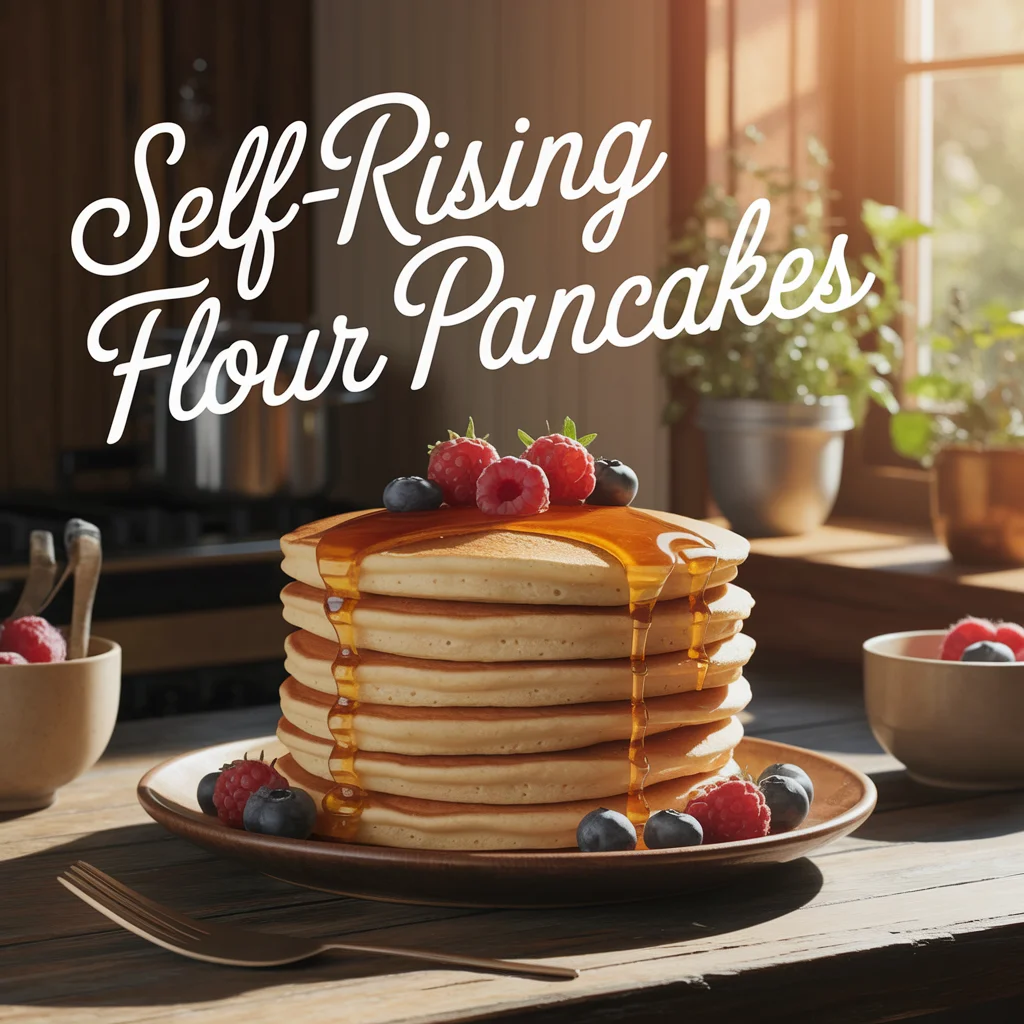
Making soft, light, and fluffy pancakes is simple when you use self-rising flour. This special flour already contains the perfect mix of baking powder and salt, so your pancakes turn out perfect every time. Whether you’re cooking for your family or just yourself, these pancakes are a delicious and fuss-free breakfast choice that everyone will enjoy. Kids especially love the soft texture- they can’t get enough of how good they taste! With this easy self-rising flour pancake recipe, you’ll get consistently fluffy results every time- no extra ingredients needed!
Adding buttermilk to the batter makes the pancakes even better by giving them a creamy and tangy flavor. When combined with self-rising flour, the batter becomes light and airy, perfect for stacking high on your breakfast plate. These pancakes whip up quickly, so even on the busiest mornings, you can enjoy a homemade breakfast without any hassle.
If you’re looking for a simple and foolproof pancake recipe, this one is ideal. You don’t need to worry about measuring baking powder or salt separately- self-rising flour does it for you! This makes it easy for anyone, even beginners, to make pancakes that taste like they came from a diner. Once you try this method, you’ll wonder why you ever made pancakes any other way.
Kids will keep asking for seconds thanks to the pancakes’ irresistibly soft and fluffy texture. Making extra is never a problem because everyone loves them so much. Breakfast becomes more special and memorable with these easy pancakes on the table, perfect for starting your day with smiles and a full belly.
Ingredients
Using the right ingredients is the first step toward making fluffy, delicious pancakes with self-rising flour. Here’s a straightforward list for a classic recipe:
| Ingredient | Quantity | Notes |
| Self-rising flour | 1 cup (120g) | Pre-mixed with baking powder and salt |
| Buttermilk | 3/4 cup (180ml) | Adds creaminess and tang |
| Egg | 1 large | Helps bind the batter |
| Melted butter | 2 tbsp | Adds richness and flavor |
| Sugar | 1 tbsp | Optional, for a slight sweetness |
| Vanilla extract | 1 tsp | Optional, enhances flavor |
| Oil or butter (for cooking) | As needed | To grease the pan |
Pro tip: If you don’t have buttermilk, you can substitute with regular milk plus 1 tbsp
Step-by-Step Instructions
Making pancakes with self-rising flour is easy once you follow a few simple steps. Here’s how to get perfect pancakes every time:
- Mix Dry Ingredients
Since self-rising flour already contains baking powder and salt, you can skip adding those separately. Simply measure 1 cup and place it in a large mixing bowl. - Combine Wet Ingredients
In a separate bowl, whisk together 3/4 cup buttermilk, 1 egg, melted butter, sugar, and vanilla extract (if using). Whisk until smooth. - Create the Batter
Pour the wet ingredients into the bowl with the self-rising flour. Stir gently with a spatula or spoon until just combined. It’s okay if there are a few small lumps – over-mixing can make pancakes tough. - Heat the Pan
Preheat a non-stick skillet or griddle over medium heat. Lightly grease with butter or oil. - Cook the Pancakes
Pour about 1/4 cup batter per pancake onto the hot pan. Cook until bubbles form on the surface (about 2-3 minutes), then flip and cook the other side until golden brown (another 1-2 minutes). - Serve Immediately
Stack the pancakes high, add your favorite toppings, and enjoy!
Why Use Self-Rising Flour?
Self-rising flour is a game-changer for pancakes. Here’s why:
- Pre-mixed convenience: It contains baking powder and salt, so no need to measure those separately. This reduces mistakes and speeds up prep time.
- Consistent results: The leavening agent is evenly distributed, which helps pancakes rise uniformly, resulting in the coveted fluffy texture.
- Versatile: You can use it in other recipes like biscuits and muffins as well.
- Ideal for beginners: Simplifies baking chemistry for home cooks who may be unfamiliar with leavening agents.
Quick Comparison Table: Self-Rising Flour vs. All-Purpose Flour in Pancakes
| Aspect | Self-Rising Flour | All-Purpose Flour + Baking Powder |
| Convenience | Baking powder & salt included | Must measure baking powder and salt separately |
| Consistency | Even distribution of leavening | It can vary depending on mixing |
| Texture | Fluffy and light pancakes | Depends on proper measuring and mixing |
| Time-saving | Yes | Slightly more preparation |
| Best for beginners | Yes | Moderate skill level |
Tips for Fluffier Pancakes
If you want your pancakes extra fluffy and soft, keep these expert tips in mind:
- Don’t overmix the batter: Stir until ingredients just come together. Overmixing develops gluten, making pancakes dense.
- Use fresh self-rising flour, as leavening agents lose potency over time. Check expiration dates.
- Let the batter rest: Allowing the batter to sit 5–10 minutes lets the flour absorb moisture and the leavening agents activate.
- Separate and whip the egg whites: For an extra lift, whip egg whites separately until soft peaks form, then fold into batter.
- Cook on medium heat: Too high heat browns pancakes too fast without cooking through; too low makes them flat and rubbery.
- Flip only once: Flip when bubbles appear and edges look set to avoid deflating the pancake.
How to Add Buttermilk for Creaminess
Buttermilk adds a creamy tang and tenderness to pancakes. Here’s why it’s a great addition:
- Acidity reacts with baking powder to create bubbles that lighten the batter.
- Adds moisture for a softer crumb.
- Enhances flavor with a mild tang, balancing sweetness.
If you don’t have buttermilk, here’s a quick homemade substitute:
| Substitute Method | Ratio | Notes |
| Milk + lemon juice or vinegar | 1 cup milk + 1 tbsp lemon juice/vinegar | Let it sit for 5 minutes before use |
| Yogurt + water | 3/4 cup yogurt + 1/4 cup water | Mix until smooth, similar texture |
Serving Suggestions
Pancakes are a versatile breakfast staple. Here are some popular ways to serve them:
- Classic: Butter and maple syrup
- Fruity: Fresh berries, banana slices, or stewed apples
- Nutty: Chopped nuts or nut butters
- Sweet: Honey, whipped cream, chocolate chips, or powdered sugar
- Savory: Bacon, sausage, or scrambled eggs on the side
Storing and Freezing Pancakes
Making pancakes ahead of time? No problem! Here’s how to store and freeze them:
- Refrigerating: Stack pancakes between parchment paper sheets and store in an airtight container for up to 3 days.
- Freezing: Lay pancakes in a single layer on a baking sheet and freeze until solid. Transfer to a freezer bag. Pancakes can be frozen for up to 2 months.
- Reheating: Reheat in the toaster, oven, or microwave. For best results, use a toaster or oven to keep pancakes crispy.
Quick Breakfast Ideas Using Pancakes
Looking to mix things up? Here are some easy breakfast ideas featuring self-rising flour pancake recipe:
- Breakfast Sandwich: Use pancakes as buns with eggs, cheese, and bacon.
- Pancake Tacos: Fold pancakes with yogurt and fresh fruit inside.
- Pancake Cereal: Make mini pancakes and serve with milk like cereal.
- Pancake Skewers: Stack small pancakes with fruit and drizzle with syrup.
Real-World Case Study: Family Breakfast Success
Case: Sarah, a busy mom in Dubai, struggled to make quick and satisfying breakfasts for her kids on school mornings. After discovering self-rising flour pancake recipe, she reported:
“Using self-rising flour cut down my prep time by half. My kids loved how soft and fluffy the pancakes were, and I loved the simplicity. It’s now a weekly staple in our home!”
This case illustrates how simple ingredient swaps like self-rising flour can improve convenience and taste, making breakfast enjoyable and stress-free for families.
Summary Table: Pancake Ingredient Impact
| Ingredient | Role in Pancakes | Impact on Texture/Flavor |
| Self-rising flour | Provides structure and leavening | Fluffy, consistent rise |
| Buttermilk | Reacts with baking powder, adds moisture | Creamy, tangy, tender crumb |
| Egg | Binds ingredients, adds richness | Softness and structure |
| Butter | Adds flavor and fat | Richness and moistness |
| Sugar | Sweetens and aids browning | Light sweetness, golden color |
Final Thoughts
Using a self-rising flour pancake recipe is one of the easiest ways to achieve consistently soft, fluffy, and light pancakes with minimal effort. This ingredient combines flour, baking powder, and salt, which simplifies the recipe by reducing the number of separate ingredients you need to measure. It ensures that your pancakes rise evenly and have the perfect texture every time.
Adding buttermilk to the batter enhances the flavor and tenderness by introducing acidity, which reacts with the leavening agents to create a light and airy crumb. This combination results in pancakes that are creamy, tangy, and deliciously moist. The simplicity of mixing wet and dry ingredients without overcomplicating the process makes this recipe beginner-friendly and fast, ideal for busy mornings or lazy weekends.
Another major advantage is the versatility of this recipe. Whether you enjoy your pancakes classic with butter and syrup or get creative with fruits, nuts, or even savory toppings, the base made with self-rising flour provides a perfect canvas. Additionally, knowing how to store and freeze pancakes means you can prepare ahead, saving time without sacrificing taste or texture.
Real-world examples show that families appreciate this recipe for its ease and consistent results, making breakfast time more enjoyable. By following expert tips such as not overmixing the batter, using fresh ingredients, and cooking at the right temperature, anyone can elevate their pancake game.
In short, the self-rising flour pancake recipe brings convenience, flavor, and fluffy perfection together in one recipe. If you haven’t tried this method yet, it’s worth a spot in your kitchen routine. Your next batch of pancakes will be effortlessly delicious, and your mornings will feel a little brighter.
FAQs
What is self-rising flour, and how is it different from regular flour?
Self-rising flour pancakes are pre-mixed with baking powder and salt, whereas regular flour has none. This means you don’t need to add leavening agents separately, simplifying recipes like pancakes and ensuring a consistent rise and fluffiness.
Can I substitute all-purpose flour for self-rising flour in pancakes?
Yes, but you must add baking powder and salt yourself. For 1 cup of all-purpose flour, add 1½ teaspoons baking powder and ¼ teaspoon salt to mimic self-rising flour’s effects.
How long can I store leftover pancakes in the fridge?
Store pancakes in an airtight container or wrapped with parchment paper between layers for up to 3 days in the refrigerator. Reheat gently to preserve softness.
Can I freeze pancakes, and how do I reheat them?
Yes! Freeze pancakes in a single layer on a baking sheet before transferring to a freezer bag. Reheat in a toaster, oven, or microwave for best results.
What makes buttermilk important in pancake recipes?
Buttermilk’s acidity reacts with baking powder to create bubbles that lighten the batter, producing a tender, moist, and tangy pancake that’s more flavorful than using milk alone.